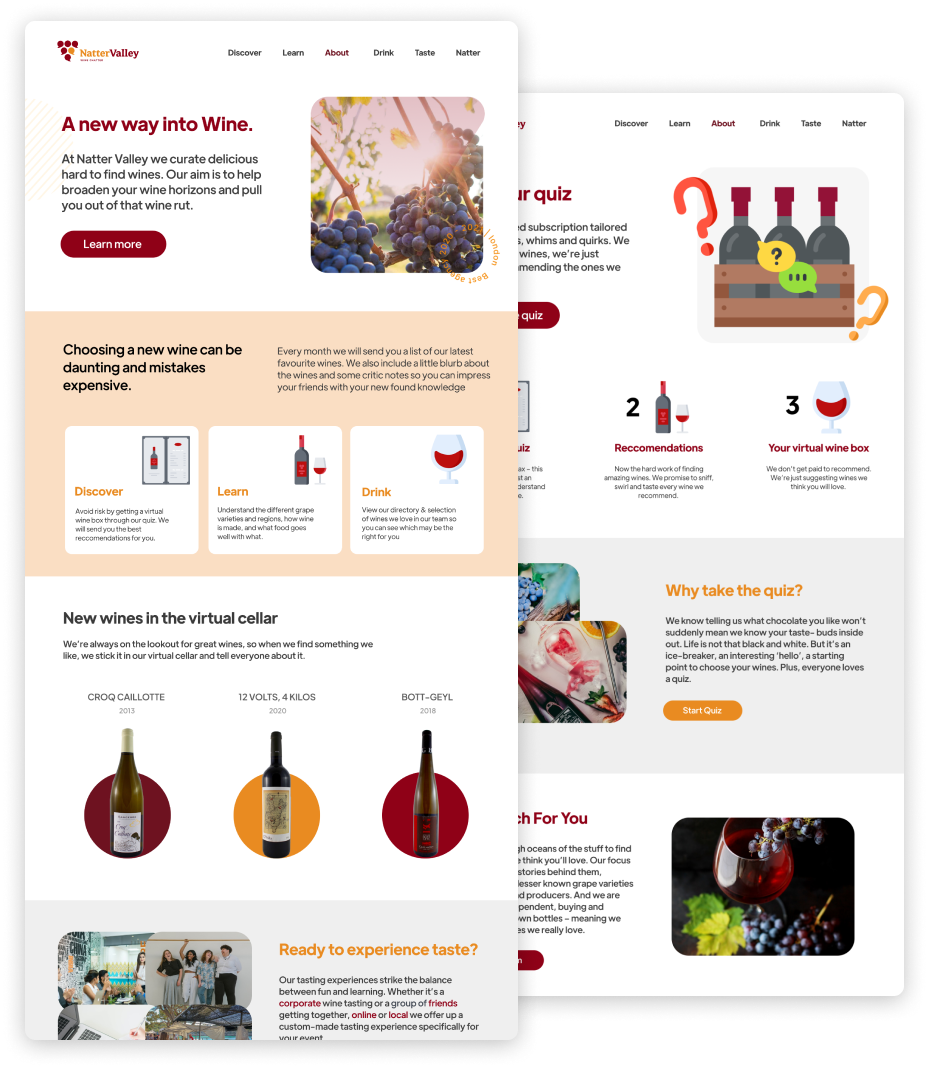
NatterValley is a wine tasting community platform that helps users receive a personalised selection of wines suited to their palate. I redeveloped the existing WordPress site in Webflow, building a dynamic taste quiz that returns a scored result, then triggers a personalised email recommendation based on the answers.
The Webflow build includes a wine glossary powered by the Webflow CMS, giving NatterValley a structured way to add and manage wine education content over time. Each entry in the glossary has its own templated detail page, with category routing built in so users can browse by varietal, region, or tasting note.
The site supports the broader NatterValley community with editorial content, member resources, and a clear path into the personalised wine experience, all manageable directly by the team through the Webflow Editor.
β
NatterValley had a WordPress site that worked fine as a basic brochure, but it could not deliver the personalised wine experience that was central to their value proposition. The concept is clever: a taste quiz that learns your preferences and recommends wines you will actually enjoy. But on WordPress, the quiz was clunky and the recommendation engine was disconnected from the rest of the site. The experience fell flat at exactly the moment it needed to be most engaging.
The wine education content was also hard to manage on the old platform. NatterValley wanted to build out a structured wine glossary that users could browse by varietal, region, or tasting note, but WordPress did not offer the content modelling flexibility to make that work without significant custom development. For a community platform built around discovery and personalisation, the digital experience was ironically generic.
There was a larger strategic issue too. NatterValley was trying to build a community, not just a shop. That requires editorial content, member resources, and a sense of ongoing life on the site. The old WordPress setup made every content update feel like a chore, which meant the site felt static at a time when the business needed it to feel alive.
I redeveloped the entire site in Webflow, starting with a dynamic taste quiz that scores user responses and triggers a personalised email recommendation based on their answers. The quiz logic runs in the browser and connects to an email automation that delivers tailored wine suggestions, closing the loop from discovery to recommendation without manual effort. The quiz itself is designed to feel playful and exploratory, not like a form to be completed.
I built a wine glossary on the Webflow CMS that gives the NatterValley team a structured way to add and manage wine education content, with each entry getting its own templated detail page. Category routing lets users browse by varietal, region, or tasting note, so the glossary works as both an educational resource and a discovery tool. The editorial CMS supports community content, member resources, and the broader storytelling that makes NatterValley feel like a community rather than just a shop.
The build connects the quiz, the glossary, and the editorial content into a coherent user journey. Someone who takes the quiz gets a recommendation, explores the glossary to learn more, and discovers community content along the way. Each piece supports the others, which is how a community platform should work.
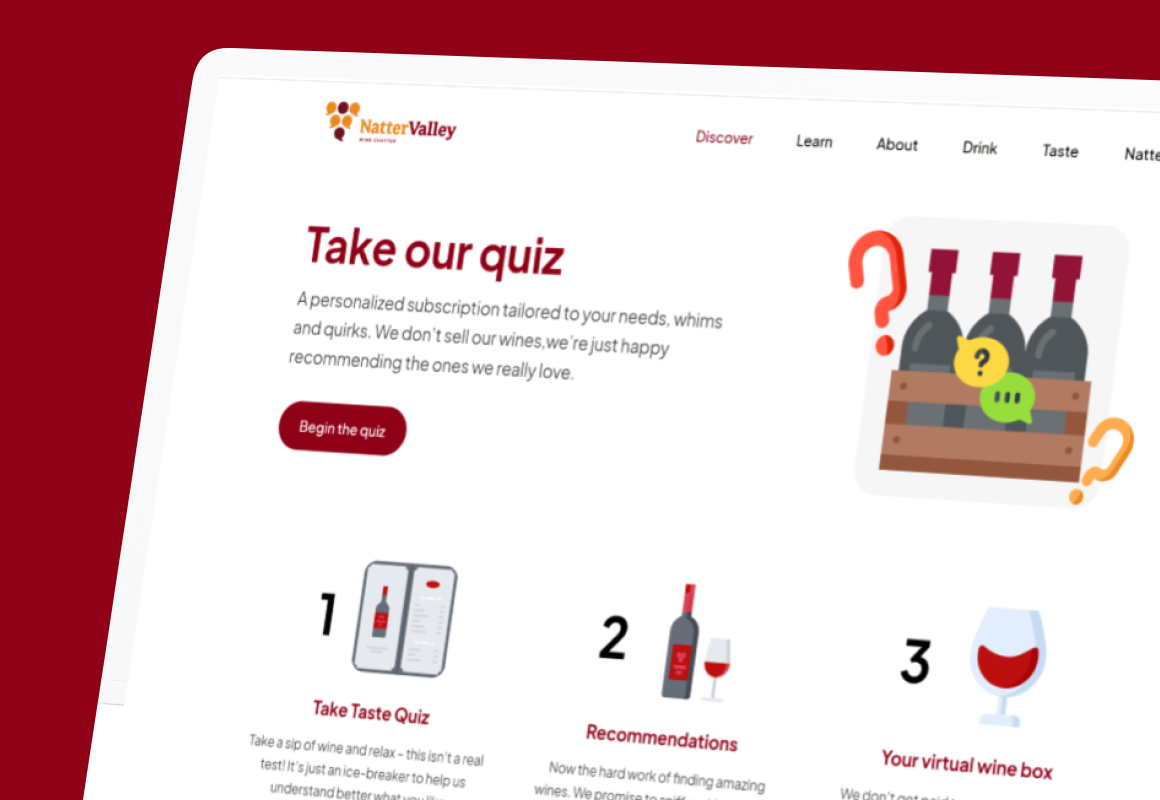
NatterValley now has a website that actually does what the brand promises: it learns your taste and guides you toward wines you will love. The quiz-to-recommendation flow turns casual visitors into engaged community members, and the wine glossary gives users a reason to explore the site beyond the initial quiz experience.
The team has full control over content through the Webflow Editor, which means the glossary and editorial sections can grow alongside the community without developer involvement. Every new wine entry, tasting note, or community story can be published directly by the people who know the content best.
The platform finally matches the quality of the idea behind it. For a wine community built on personalisation and discovery, having a digital experience that actually delivers on both of those things is not just a nice upgrade; it is the difference between a concept that sounds good and a business that works.