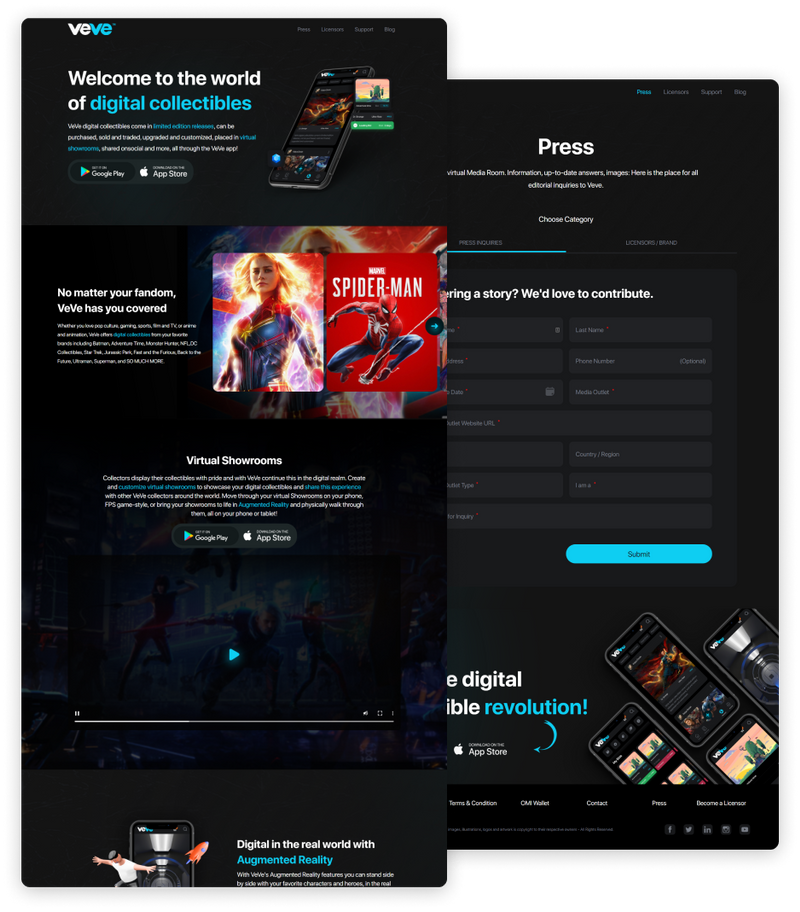
VeVe (built by ECOMI) is a popular NFT crypto platform that attracted significant investor attention during the NFT growth period. As a personal design challenge, I redesigned the marketing site and supporting app experience in Figma, then developed an interactive prototype in Webflow and submitted the concept to the ECOMI team for feedback.
The concept redesign focused on how a maturing NFT marketplace could communicate trust, marketplace activity, and collector experience to a fast-growing audience of crypto-native investors. The Webflow prototype was built to make the design explorable in browser rather than only viewable as static Figma frames.
The project lives on a Webflow staging URL as a portfolio piece rather than a launched product, demonstrating end-to-end design and Webflow build capability across brand-led marketplace concepts.
β
VeVe had captured significant attention during the NFT growth period, building a popular marketplace for licensed digital collectibles. But as the NFT space matured, marketplace design was evolving fast. The early wave of NFT platforms had proven the concept, but the user experience often lagged behind the hype. VeVe's existing marketing site and companion app needed to communicate trust, marketplace activity, and collector experience to a fast-growing audience of crypto-native investors who were becoming increasingly discerning.
I saw an opportunity to explore what a maturing NFT marketplace could look like if design was treated as a strategic asset rather than an afterthought. The NFT space had proven that people would tolerate clunky UX during the gold rush phase, but as the market matured, the platforms that invested in design quality would be the ones that retained users and attracted serious collectors.
This was a self-initiated design challenge, not a client commission. I wanted to demonstrate that I could think strategically about platform design at scale, beyond the marketing sites and content platforms that made up most of my client work. An NFT marketplace concept would show end-to-end design thinking across brand, marketing, and product experience.
I undertook this as a personal design challenge, redesigning the marketing site and supporting app experience entirely in Figma before developing an interactive Webflow prototype. The concept focused on three things: trust signalling through professional design language, marketplace activity visualisation that makes the platform feel alive, and a collector experience that feels polished rather than experimental.
I built the Webflow prototype to be explorable in a browser rather than only viewable as static Figma frames, because marketplace design needs to be felt in motion. How filters work, how collections browse, how the experience flows from discovery to purchase: these are interactions that static mockups cannot adequately communicate. The Webflow prototype let me demonstrate the full experience, including animations, transitions, and responsive behaviour.
The design system I developed for the concept covers the marketing landing experience, the marketplace browsing flow, and the collector dashboard. Each surface uses a consistent visual language that I built to feel credible and mature, avoiding the gamified aesthetic that characterised early NFT platforms in favour of something that could scale with the market.
The VeVe concept redesign lives on a Webflow staging URL as a portfolio piece that demonstrates end-to-end design and Webflow build capability across brand-led marketplace concepts. It shows how design thinking can elevate a platform from functional to compelling, which is exactly the kind of work I want to do more of.
The project deepened my understanding of marketplace UX patterns, Web3 design conventions, and the specific challenges of communicating trust and activity to crypto-native audiences. Those insights now inform how I approach any platform design project, whether it is in Web3 or not. The discipline of designing for a sceptical, technically literate audience translates across industries.
Whether or not ECOMI adopts elements of the concept, the project serves as a clear demonstration of what I bring to platform redesign work: strategic thinking, execution capability, and the ability to make ideas explorable rather than just presentable. For clients considering platform work, it is often the project that convinces them I can handle complexity beyond marketing sites.