Website backlog template
Website and product backlog template for marketing teams
Download a practical CSV and use a simple weekly method to prioritise website fixes, launches, SEO, analytics and product requests.
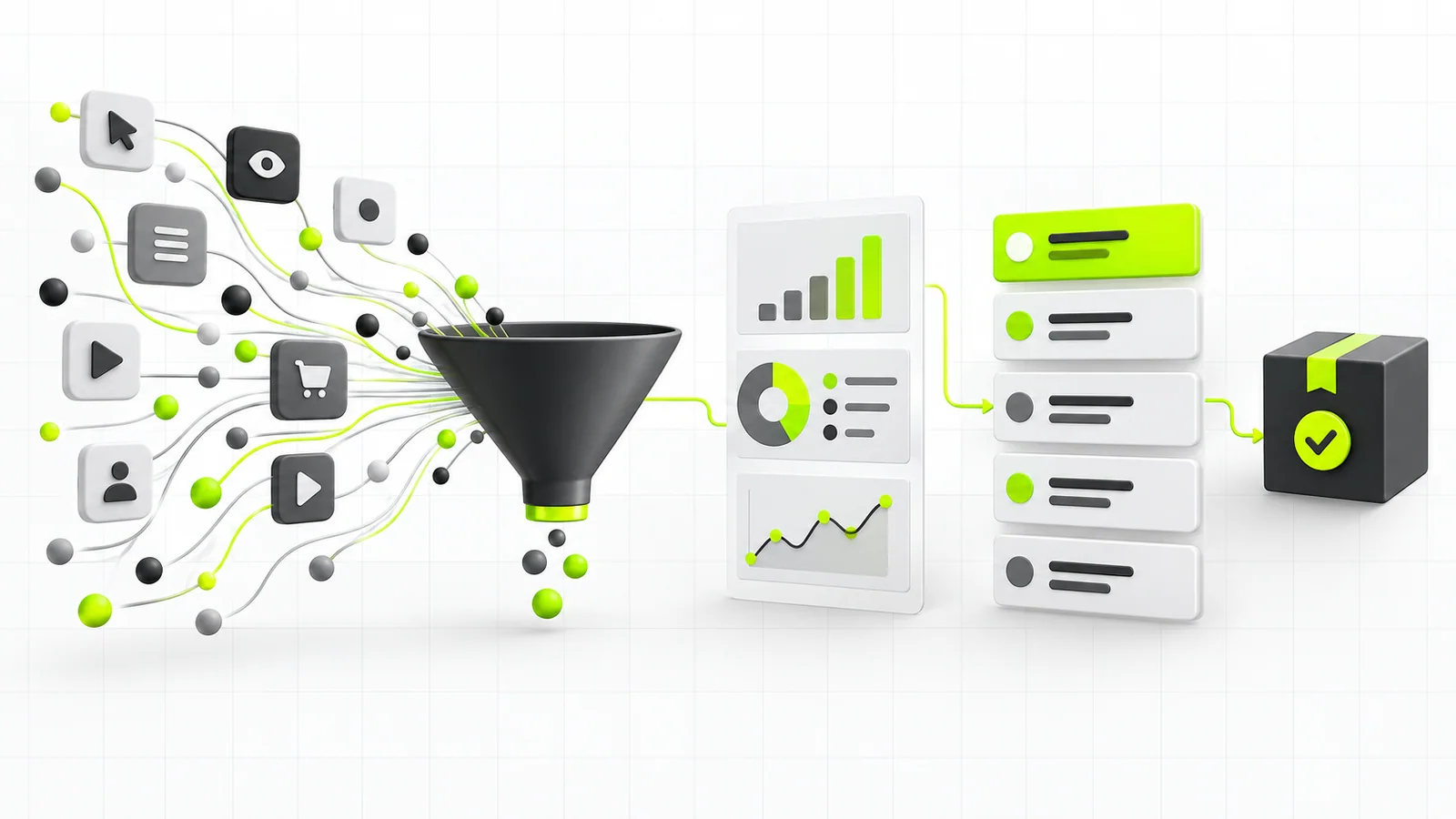
A useful backlog is not a long list of opinions about the website. It is a queue of problems and opportunities with enough evidence to decide what deserves attention next.
This template is designed for the space between marketing, product and engineering. It can hold a broken form, a campaign landing page, an SEO opportunity, an analytics gap or a product onboarding problem without pretending they are all the same kind of work.
Free website and product backlog CSV
Open it in Google Sheets, Excel, Airtable, ClickUp or any tool that accepts CSV files. The sample rows show how to write actionable items.
What each field is for
| Field | What to record |
|---|---|
| Area | Conversion, SEO, campaign, analytics, CRM, content, product or another useful group. |
| Problem or opportunity | The situation to change, written without prescribing the solution too early. |
| Evidence | Customer feedback, behaviour, commercial data, an error, search demand or a known deadline. |
| Expected outcome | The result that would make the work worthwhile. |
| Impact | Low, medium or high based on the size and value of the affected audience. |
| Effort | Small, medium or large based on design, development, content and coordination. |
| Risk | Delivery, legal, data, revenue or dependency risk that changes the order. |
| Owner | The one person responsible for moving the item forward. |
| Status | Inbox, evidence needed, ready, in progress, checking or done. |
| Next check | The date the team will review evidence or progress again. |
| Related URL | The live page, design, issue or supporting document. |
Five example backlog items
| Area | Problem or opportunity | Evidence | Impact | Effort |
|---|---|---|---|---|
| Conversion | Visitors open contact but few begin the form. | Contact-click to form-start funnel | High | Small |
| Technical SEO | Retired integration URLs still receive impressions. | Search Console pages report | Medium | Small |
| Campaign | The next launch needs one focused landing journey. | Approved campaign brief and launch date | High | Medium |
| CRM | Qualified enquiries sometimes arrive without a service value. | HubSpot records from the last 30 days | High | Small |
| Product | New accounts reach sign-up but miss the first useful action. | Activation funnel and support conversations | High | Medium |
A simple weekly triage
- Clear the inbox. Rewrite vague requests as a problem, evidence and expected outcome.
- Remove duplicates. Keep one item and attach all useful evidence to it.
- Choose the next few items. Prefer high-impact, low-effort work and urgent risk before filling every available week.
- Name one owner. Contributors can be many, but responsibility should be clear.
- Decide how it will be checked. Add the event, report, customer signal or release test before work begins.
Keep the meeting short. Deep solution design can happen with the people who need to make it, not with everyone who can see the board.
Use impact and effort as a conversation
Impact and effort are useful because they expose disagreement. They are not precise mathematics. A high-impact label should be supported by reach, commercial value, customer pain or risk. An effort label should include design, content, development, dependencies, review and release.
- High impact, small effort: prepare it for the next release.
- High impact, large effort: break it down or run a discovery step.
- Low impact, small effort: batch it when the surrounding area is already being changed.
- Low impact, large effort: leave it alone unless new evidence appears.
What not to put in the backlog
- A solution with no explained problem, such as “add a chatbot”.
- An idea nobody is willing to own or revisit.
- A permanent recurring task that belongs in an operating checklist.
- A bug that is actively losing enquiries or revenue and should be handled now.
- A duplicate request kept only because it came from another channel.
How I use this with ClickUp and Slack
Slack is useful for noticing problems and collecting context. It is a poor long-term source of truth. Move actionable work into ClickUp or the team backlog, link the original conversation and let updates flow back to the relevant channel.
Give new items an inbox status. During triage, either add evidence, prepare the item, merge it, schedule a check or close it. This keeps the board smaller and stops every passing idea competing with work tied to a real outcome.
Measure the change after it ships
A completed task is not automatically a successful change. Check the expected outcome after enough relevant traffic or customer use. Record what happened, then decide whether to keep it, improve it or reverse it.
That final step turns a backlog from a delivery queue into a useful learning system. It also makes future prioritisation better because the team can compare expectations with what actually happened.

.jpg)