Web app and MVP cost guide
How much does a custom web app cost in the UK?
Use the interactive planner to estimate a sensible range for a custom web app, mobile app or MVP, then see what changes the cost.
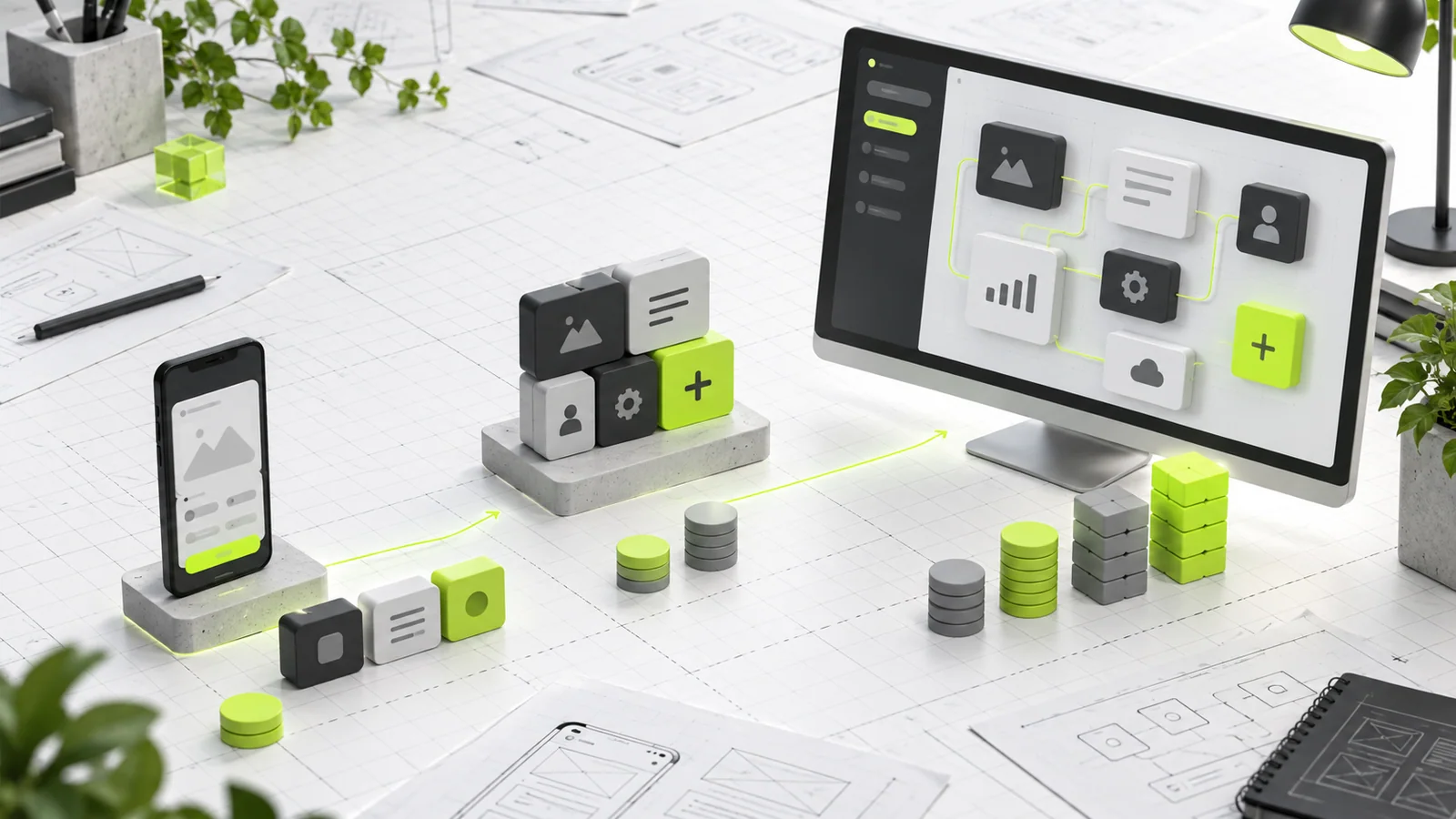
A custom app can cost a few thousand pounds or many times that amount. The useful question is not what apps cost in general. It is what the smallest dependable version of your product needs to do, who it is for and what must be true before you can release it.
The planner below uses the way I scope independent website and product work. It is an early planning model, not a fixed quote or a survey of agency rates.
Shape a realistic first release
Choose the closest version of the product. The range is for planning an independent build, not a fixed quote or a claim about the whole market.
Indicative build range
£6,500 to £15,500
Roughly 4 to 7 delivery weeks
Assumes
- • A clear primary user and problem
- • One decision-maker and timely feedback
- • Existing brand foundations or a simple visual system
- • Hosting and third-party fees priced separately
Discovery can move the range in either direction. Regulated data, offline behaviour, complex migrations and native device features need a closer review.
The short answer
A focused internal tool can often be planned from about £3,500 to £8,500. A customer-facing MVP with authentication, real data and a clear core workflow commonly starts around £8,000 to £22,000. A shared web and mobile product, or a release with complex roles and integrations, can reach £18,000 to £45,000 or more.
Those ranges are my own planning bands. They assume a small decision-making group, sensible feature boundaries and a release that proves something useful. They do not include every possible agency model, third-party subscription or long-term support arrangement.
Prototype, MVP or production release?
| Release | What it should prove | What it usually includes |
|---|---|---|
| Working prototype | People understand and can complete the core flow. | A believable interface, representative data and enough logic to test the idea. |
| Focused MVP | Real users will adopt the product for one meaningful job. | Accounts, real data, a primary workflow, analytics and a practical release process. |
| Production first release | The product can become part of a real operation. | Reliable permissions, edge cases, monitoring, support paths and stronger quality controls. |
Calling something an MVP does not automatically make it small. If it needs five user roles, offline behaviour, payments, complex migration and native device access, the label has not removed the work.
What changes the cost most?
The number of real workflows
Screens are not the best unit of complexity. A product with twelve screens but one clear journey may be simpler than a four-screen tool with approval states, exceptions and three kinds of user.
Users, roles and permissions
A single account type is straightforward. Administrators, clients, staff and external partners each introduce rules about what can be viewed, changed, approved and exported.
Data and integrations
Connecting HubSpot, Stripe or another API is not just adding a connector. The build needs to handle missing data, duplicate records, failed requests, permissions and what happens when the other system changes.
Native and offline behaviour
Camera access, notifications, background tasks, location, app-store distribution and offline sync can justify a mobile app. They also create more states to design and test. If the core job works well in a browser, a responsive web app can be the more economical first release.
Design and content readiness
A clear visual system and approved product language reduce ambiguity. If the product proposition, onboarding and interface all need to be discovered during development, allow time for that thinking rather than hiding it in a build estimate.
Three worked planning examples
Focused internal tool: £3,500 to £8,500
- One main workflow for a small known team.
- Simple sign-in or controlled access.
- One data source or lightweight integration.
- Responsive web interface with practical reporting.
Customer-facing MVP: £8,000 to £22,000
- Account creation and a useful onboarding path.
- A complete core workflow using real data.
- Transactional email, analytics and basic administration.
- A tested release with monitoring and a clear support route.
Web and mobile first release: £18,000 to £45,000+
- A shared product model across browser, iOS and Android.
- Native capabilities such as notifications or camera access.
- Several account types, integrations or payment flows.
- Store preparation, device testing and release operations.
What belongs in the first release?
Start with the one outcome that proves the product deserves another release. Describe it as a complete journey: who arrives, what they need to do, what the system changes and what evidence tells you it worked.
A useful first-release test is:
- Would the product still solve the main problem without this feature?
- Does it reduce a known risk, or only make the idea feel more complete?
- Can the team support it properly after launch?
- Can a manual step cover the need while demand is still uncertain?
- What event or customer behaviour will tell us whether to keep improving it?
Why the cheapest quote can be misleading
Two quotes can describe different products while using the same feature list. One may include discovery, responsive states, data rules, analytics, testing and release support. Another may price only the visible screens and assume everything else will be decided later.
Ask what happens when a request fails, a user lacks permission, data already exists or the product needs to be changed after launch. The answers expose whether the quote covers a working product or only a convincing demonstration.

.jpg)