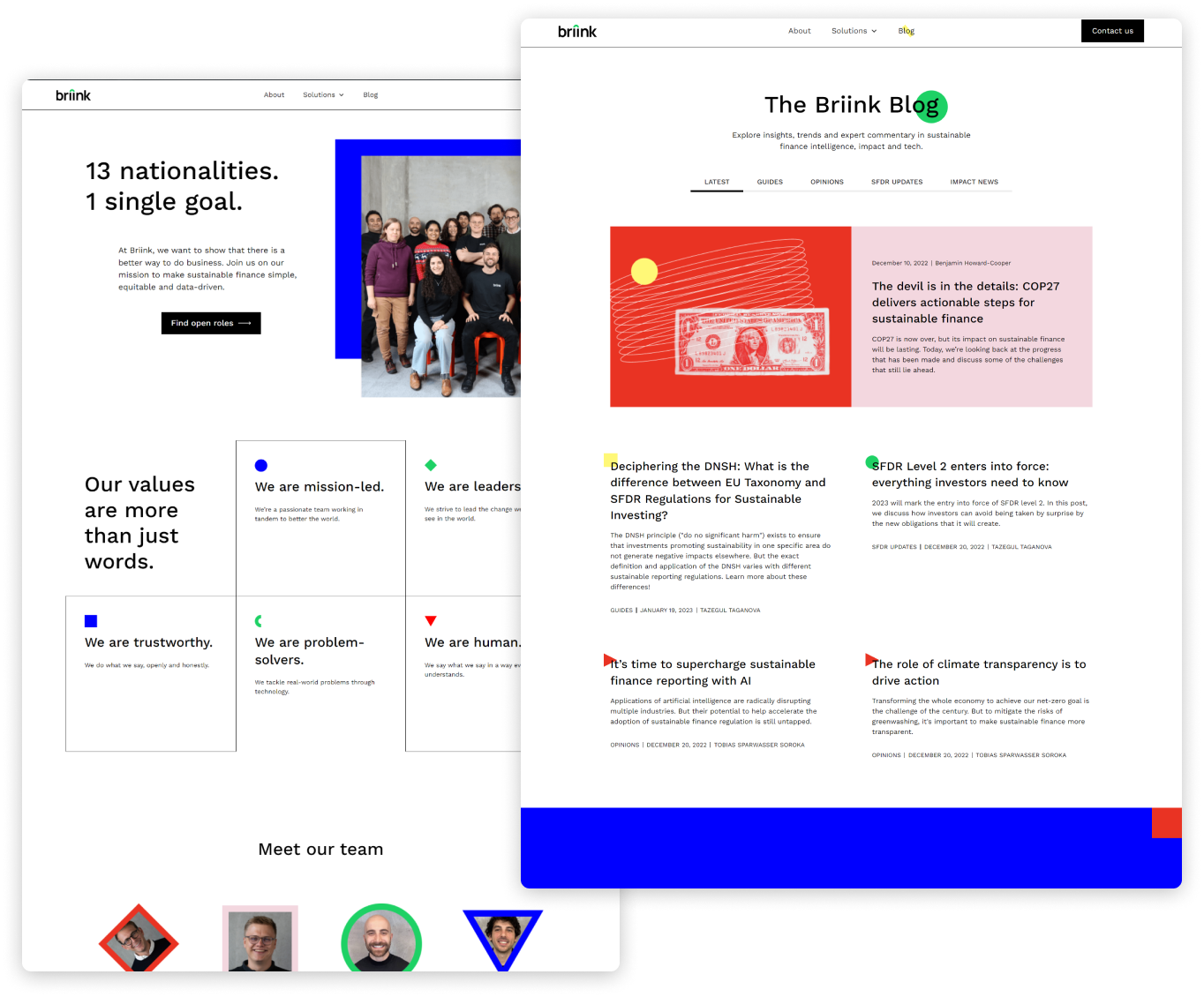
I support Briink, a sustainability and ESG intelligence platform, with Webflow design and development across their marketing site. The work covers Figma design concepts taken into Webflow build, then ongoing campaign-driven updates as the platform's product and audience evolve.
A streamlined Figma-to-Webflow workflow keeps new campaign pages, product updates, and content additions quick to deploy. The Webflow CMS lets the Briink team manage editorial content directly, while I handle the structural and technical work that keeps the site fast, accessible, and SEO-aligned.
β
Briink operates in the ESG and sustainability intelligence space, which means their marketing site has to communicate complex, data-heavy concepts without losing the clarity that drives conversion. The platform was evolving rapidly as the product matured and the audience expanded, but the marketing site needed to keep pace with that evolution without a complete rebuild every quarter.
The underlying tension was between speed and quality. Campaign pages, product updates, and new content initiatives needed to launch fast enough to match the product roadmap, but not so fast that design quality or SEO performance suffered. The Briink team had the editorial energy; what they needed was a workflow that turned that energy into live pages without a developer bottleneck.
I established a streamlined Figma-to-Webflow workflow that lets new campaign pages, product updates, and content additions move from concept to live site quickly. The process is designed around iteration: Figma concepts get translated into Webflow builds with fidelity, then the CMS picks up ongoing content management while I handle the structural and technical work that keeps the site fast, accessible, and SEO-aligned.
The Webflow CMS was configured so the Briink team manages editorial content directly. Blog posts, resource pages, and campaign content all live in structured collections with templates that maintain visual consistency. I handle the ongoing design and development work: new page types, component updates, performance optimisation, and anything that requires technical intervention. The split is deliberate: editorial independence for the team, technical stewardship where it adds value.
Briink's marketing site now moves at the speed of their product development. Campaign pages launch in days rather than weeks, and the CMS gives the team genuine editorial autonomy. The Figma-to-Webflow pipeline means design quality doesn't degrade as velocity increases; each new page benefits from the same attention to typography, spacing, and interaction that the core site received.
The ongoing relationship means the site is never static. As the platform adds features and the audience expands, the marketing site evolves in parallel. Performance, accessibility, and search visibility are maintained as continuous priorities rather than one-time launch concerns.